
Your images are more than decoration.
For photographers, designers, agencies, creators, publishers, and ecommerce brands, galleries are part of the way people experience your website — and for online stores, they can directly influence how customers discover, understand, and buy products.
That’s why choosing the right gallery solution matters.
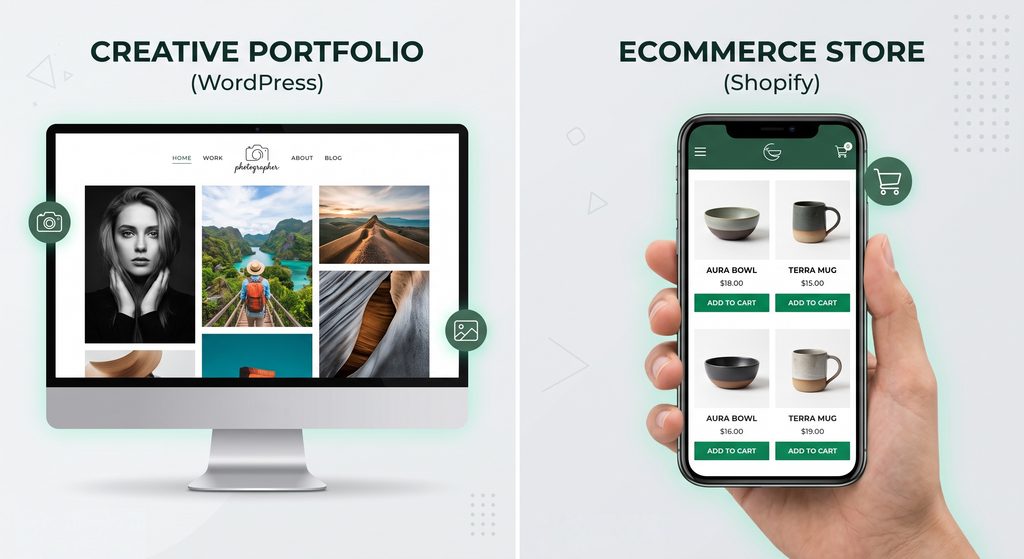
Re Gallery is built for both WordPress and Shopify, giving businesses a way to create beautiful, responsive image experiences while choosing the platform that best fits their needs.
But WordPress and Shopify serve different purposes.
So which one should you use?
The answer depends on what you’re building.
Re Gallery for WordPress vs Shopify
The simplest way to think about it is:
Re Gallery for WordPress is ideal when your website is primarily a content, portfolio, creative, or highly customizable website.
Re Gallery for Shopify is ideal when your website is primarily an ecommerce store and your images need to help customers discover and purchase products.
Both can help you create more engaging image galleries, but the surrounding platform changes how you’ll use them.
Re Gallery for WordPress
WordPress gives you extensive control over your website.
You can combine your content, blog, portfolio, landing pages, SEO strategy, ecommerce and galleries in almost any way you want.
Re Gallery adds a visual layer to that ecosystem.
With Re Gallery for WordPress, you can create galleries using 11 layouts and 55+ templates, including Grid, Masonry, Mosaic, Justified, Slider, Carousel, Cards, Cube, Blog, Coverflow and Scroller.
The WordPress version is particularly suited to websites where images are part of the content and storytelling experience, not only product presentation.
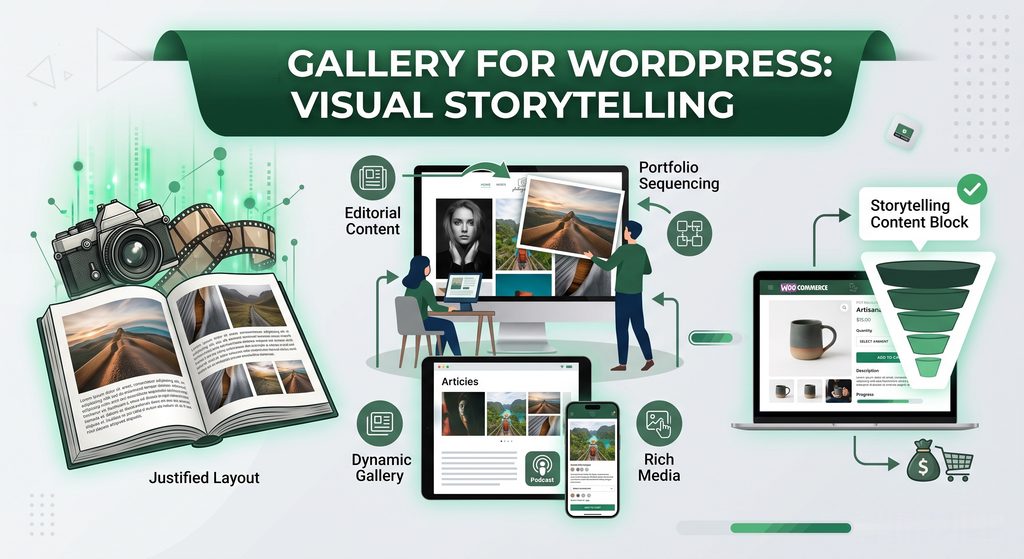
Re Gallery for WordPress is a strong choice for:
- Photographers
- Photography portfolios
- Designers
- Creative agencies
- Artists
- Bloggers
- Travel websites
- Personal brands
- Publishers
- Portfolio websites
- WooCommerce stores
- Visual storytelling websites
It also integrates with popular WordPress builders and WooCommerce, allowing you to build galleries around your existing website and ecommerce content.
Re Gallery for Shopify
Shopify approaches the problem from a different direction.
Shopify is an ecommerce platform, so your images usually exist in the context of products, collections, shopping and conversion.
That’s where Re Gallery for Shopify comes in.
Instead of accepting a basic product image presentation, merchants can use Re Gallery to create more engaging visual experiences for their storefront.
The goal is simple:
Make your products look as good online as they do in your photography.
Re Gallery for Shopify is designed around modern Shopify stores, with an emphasis on beautiful product presentation, responsive experiences, customization and performance.
The Shopify App Store currently includes Re Gallery among its image-gallery apps, with its listing highlighting 11 layouts and 55+ templates.
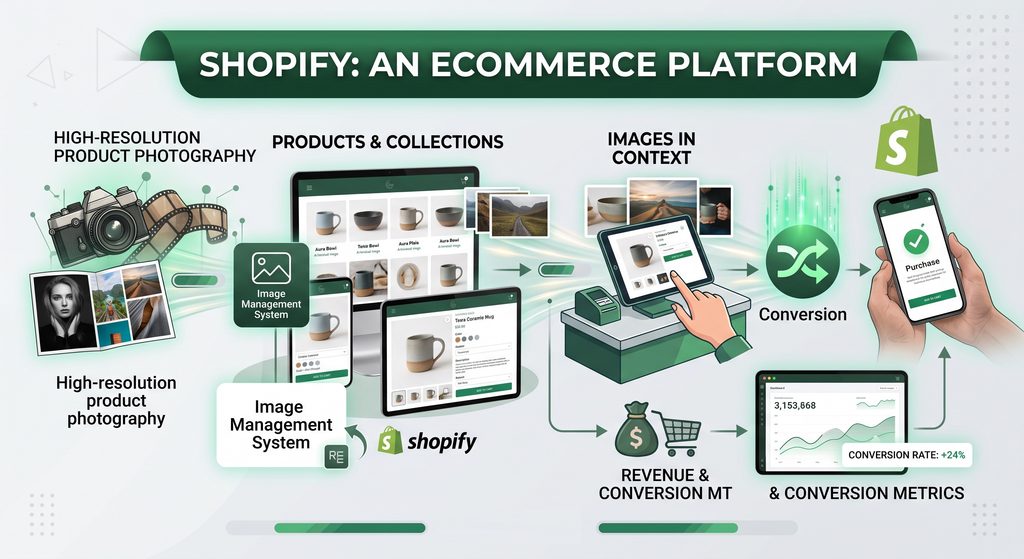
Re Gallery for Shopify is especially useful for:
- Fashion stores
- Beauty brands
- Furniture stores
- Jewelry brands
- Art stores
- Lifestyle brands
- Product-based businesses
- DTC brands
- Shopify merchants with large product catalogs
- Stores that want more visual product presentation
WordPress or Shopify: Which Platform Should You Choose?
The choice should come before the gallery.
Ask yourself:
Are you building a website around content?
Are you building a website around selling products?
Do you need a portfolio, blog, custom content and creative freedom?
WordPress is likely the better fit.
Do you need products, checkout, inventory and ecommerce management?
Shopify is likely the better fit.
And once you’ve chosen your platform, Re Gallery gives you a way to build better image experiences on either one.
Re Gallery WordPress vs Shopify: Feature Comparison
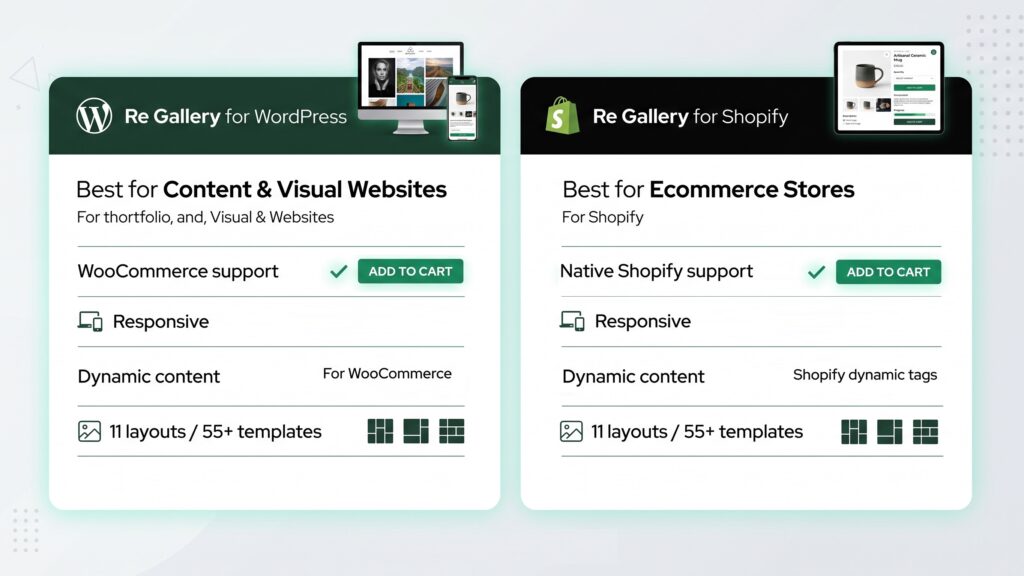
| Re Gallery for WordPress | Re Gallery for Shopify | |
|---|---|---|
| Best for | Content & visual websites | Ecommerce stores |
| Platform | WordPress | Shopify |
| Image galleries | ✓ | ✓ |
| Gallery layouts | 11 | 11 |
| Gallery templates | 55+ | 55+ |
| Responsive galleries | ✓ | ✓ |
| Portfolio galleries | ✓ | ✓ |
| Product galleries | WooCommerce | Shopify products |
| Ecommerce | WooCommerce | Native Shopify |
| AI image SEO | ✓ | ✓ |
| Page builder ecosystem | ✓ | Shopify theme/editor ecosystem |
| Dynamic content | ✓ | Product/store content |
| Best for photographers | Excellent | Good |
| Best for online stores | Excellent with WooCommerce | Excellent |
| Best for content websites | Excellent | Limited |
| Best for ecommerce-first businesses | Good | Excellent |
Re Gallery for Photographers
If you’re a photographer, your website isn’t simply an online store.
Your images are the product.
You need to showcase your work through portfolios, albums, projects and stories.
This is where WordPress + Re Gallery can be particularly powerful.
You can create:
- Wedding photography galleries
- Portrait portfolios
- Travel photography
- Editorial collections
- Architecture portfolios
- Photography blogs
- Client galleries
- Full visual portfolios
You have more freedom to build the entire website around your photography.
But what if you sell photography products?
If you’re selling prints, presets, books or other products and your business is primarily ecommerce, Shopify + Re Gallery may make more sense.
The decision isn’t about photography itself.
It’s about whether your website is content-first or commerce-first.
Re Gallery for Shopify Stores
For Shopify merchants, the gallery has a different job.
The customer needs to quickly understand:
What is this product?
What does it look like?
What does it look like from different angles?
How does it look in real life?
Why should I buy it?
A good product gallery can help answer those questions without making the page feel cluttered.
This is particularly important for visually driven categories such as fashion, jewelry, furniture, cosmetics, art and lifestyle products.
Instead of treating product images as a technical requirement, Re Gallery helps merchants treat them as part of the shopping experience.
Why Gallery Design Matters for Ecommerce
A product page can contain excellent photography and still feel underwhelming if those images are poorly presented.
A gallery should help customers move naturally through the product story.
For example:
Hero image → Detail → Different angle → Lifestyle image → Product in use
The gallery becomes part of the conversion experience.
This is especially relevant on mobile, where customers often interact with product images before reading the full product description.
Re Gallery is designed to make these visual experiences responsive and customizable rather than forcing every store into the same presentation.
WordPress + Re Gallery vs Shopify + Re Gallery
The important thing is that you don’t have to choose between Re Gallery and Shopify or Re Gallery and WordPress.
You choose the platform first.
Then Re Gallery becomes your gallery solution.
Choose WordPress + Re Gallery if:
You want:
- Maximum website flexibility
- A photography or design portfolio
- Content marketing
- Blogging
- Custom pages
- Advanced visual storytelling
- WooCommerce
- WordPress SEO
- AI-powered image SEO
- Multiple content types in your galleries
Choose Shopify + Re Gallery if:
You want:
- An ecommerce-first website
- Product-focused galleries
- Shopify’s managed infrastructure
- Products and collections
- Checkout and payments
- Inventory management
- A simpler ecommerce workflow
- Beautiful product presentation
- Responsive storefront galleries
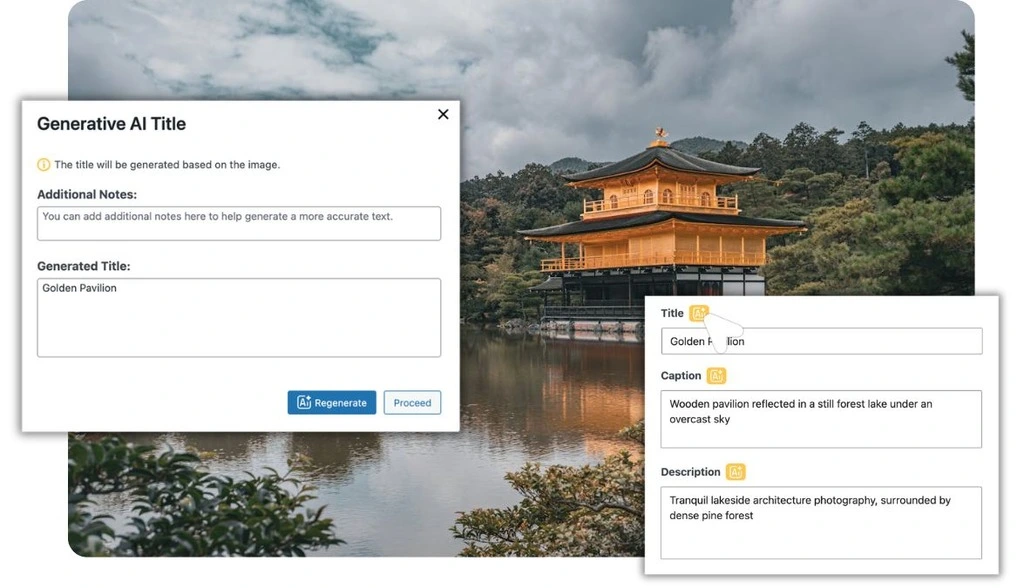
Re Gallery’s AI Advantage on WordPress
One important difference is the AI image SEO functionality available in the WordPress version.
Re Gallery can help generate:
- Image titles
- Alt text
- Captions
- Descriptions
This is especially valuable for websites with hundreds or thousands of images.
Instead of manually writing metadata for every image, AI can help automate part of the process.
That makes Re Gallery particularly interesting for photographers, publishers, bloggers, agencies and other content-heavy WordPress websites.
AI for Shopify
Shopify merchants can benefit from AI as well.
For ecommerce businesses, AI can help turn large product-image collections into more useful, organized and engaging visual content.
This is particularly valuable when a store has:
- Hundreds of products
- Multiple images per product
- Large product catalogs
- Frequently changing collections
- Multiple visual assets
- Product-focused SEO requirements
Instead of treating every product image as a separate manual task, Re Gallery brings AI into the gallery experience to help merchants work more efficiently.
For Shopify stores, the focus is especially practical:
Use AI to make managing and presenting large product-image collections easier.
Which Re Gallery Version Is Right for You?
Think about your website in one sentence.
“I want to showcase my work.”
WordPress + Re Gallery
“I want to publish content and tell stories through images.”
WordPress + Re Gallery
“I want to sell products online.”
Shopify + Re Gallery
“I want an ecommerce store with beautiful product galleries.”
Shopify + Re Gallery
“I want WooCommerce and complete WordPress flexibility.”
WordPress + Re Gallery
“I want a photography portfolio and an online store.”
Both can work — choose based on whether your business is primarily portfolio/content-driven or ecommerce-driven.
There isn’t one universal “best” platform.
WordPress + Re Gallery is the better fit for businesses that need flexibility, content, portfolios, storytelling, SEO control and custom website experiences.
Shopify + Re Gallery is the better fit for businesses that primarily sell products and want to improve the way those products are presented through modern, responsive galleries.
The important part is that you don’t have to compromise on visual presentation.
Whether your website is a portfolio, publication, creative business or online store, Re Gallery is built around one simple idea:
Your images deserve to be more than a grid.
They should tell your story, showcase your work, present your products and help people experience your brand.